
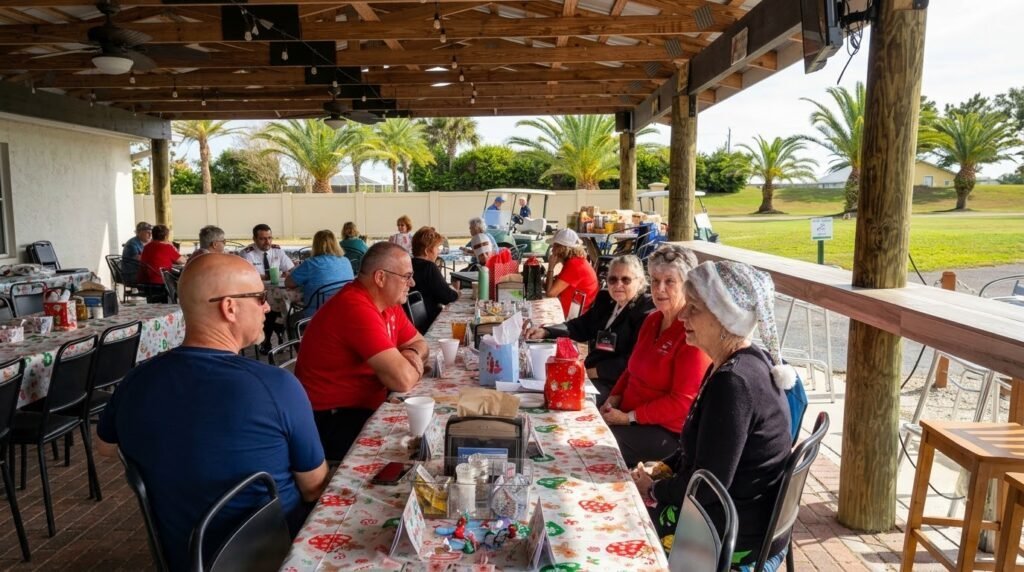
A corporate or charity golf event does not need to occupy an entire day to feel substantial.
For busy executives, clients, employees, donors and community partners, a shorter format can make participation easier while still leaving enough time for golf, networking, food, sponsor recognition and awards.
Paradise Golf Course in Arcadia offers an unusual starting point for that kind of event.
The club operates a regulation 12-hole course near Port Charlotte and Punta Gorda and publicly promotes corporate and charity golf events for groups ranging from smaller outings to events of up to 80 players.
Paradise also promotes its normal 12-hole round as playable in less than three hours under suitable conditions.
Those two facts create an interesting event-planning opportunity, but they should not be combined into an unsupported promise that:
“An 80-player event will finish golf in three hours.”
Large-group pace depends on the starting configuration, number of groups, contests, golfer experience, weather and the operating plan approved by the course.
The better objective is to build a compact, intentional event and let Paradise confirm the actual golf window.
Quick Answer: How Can You Structure an 80-Player Golf Outing?
An 80-player field equals 20 foursomes when using four-person teams.
Because Paradise has 12 holes, a compact event involving most or all teams entering the course within the same general starting period requires a start plan designed by the Golf Shop.
That might involve:
- Staggered starting groups
- Paired starting positions
- Waves
- Another course-approved format
The organizer should not advertise a shotgun start, modified shotgun or specific starting pattern before Paradise approves it.
A useful planning framework is:
- Define the business or fundraising goal.
- Estimate the field.
- Let Paradise design the start plan.
- Choose a simple golf format.
- Build registration around that operating plan.
- Limit sponsorship activations.
- Coordinate food and awards.
- Create one weather communication process.
- Finish with a measurable post-event outcome.
The 80-Player Event Model at a Glance
| Planning Variable | Working Model |
| Maximum field being modeled | 80 golfers |
| Example team size | 4 golfers |
| Example number of teams | 20 |
| Golf format | Four-person scramble may work well |
| Course format | 12 holes |
| Start method | Confirmed by Paradise |
| Golf duration | Event-specific; confirmed by Paradise |
| Food and awards | Planned with the club |
| Total guest commitment | Calculated after golf window is confirmed |
The important point is that 80 golfers is a capacity question, while event duration is an operations question.
Treat them separately.
Start With the Event Goal
Before choosing contests, sponsorship levels or prizes, define what success means.
Write one sentence.
For example:
Corporate Client Event
Strengthen relationships with 20 priority clients and create meaningful post-event sales conversations.
Employee Appreciation Event
Give employees and guests an enjoyable shared experience that feels inclusive rather than overly competitive.
Charity Tournament
Raise a specific amount of net proceeds while introducing new supporters to the organization’s mission.
Community Event
Build an annual gathering that participants and sponsors want to support again.
That sentence should guide nearly every later decision.
Corporate and Charity Events Need Different Success Metrics
A corporate outing should not automatically be judged by fundraising metrics.
Track outcomes such as:
- Priority-client attendance
- Meaningful conversations
- Employee participation
- Partner introductions
- Follow-up meetings
- Guest satisfaction
A charity event may instead track:
- Gross revenue
- Net proceeds
- Sponsor revenue
- New donors
- Sponsor renewal interest
- Post-event engagement
Attendance tells you who came.
It does not tell you whether the event accomplished its purpose.
Contact Paradise Before Advertising the Event
Before publishing a date or selling sponsorships, share the event concept with Paradise.
Provide:
- Preferred dates
- Estimated golfer count
- Maximum golfer count
- Corporate or charitable purpose
- Preferred arrival window
- Desired event finish
- Proposed team format
- Food expectations
- Contest ideas
- Sponsor activation concepts
- Practice-area needs
- Accessibility considerations
- Weather questions
Then ask the course to determine what is operationally realistic.
Confirm These Items First
Before launch, confirm:
- Date availability
- Maximum field
- Start type
- Cart plan
- Event golf window
- Practice-area availability
- Contest locations
- Scoring support
- Food options
- Weather procedure
- Deposit/payment terms
- Participant arrival instructions
This prevents the planning committee from selling something the course cannot deliver.
Why a Four-Person Scramble May Work Well
For a mixed-ability corporate or charity outing, a four-person scramble is often worth considering.
Each player hits a shot.
The team selects its preferred result.
Everyone then plays from that general position according to the event rules.
That approach can help because it:
- Reduces pressure on newer golfers
- Encourages teamwork
- Keeps every player involved
- Produces simple team scoring
- Makes mixed-ability groups easier to manage
But it should remain a recommended format, not an assumed Paradise policy.
Confirm the final format with the Golf Shop.
Keep the Rules Simple
Before event day, decide:
- Ball-placement procedure
- Tee assignments
- Tie-breaking method
- Whether minimum drives are required
- Whether mulligans are allowed
- How rules questions are handled
Avoid turning every hole into a different mini-game.
One or two well-run contests usually create more energy than twelve different instructions everyone has to remember.
Let Paradise Design the Starting Plan
This is the most important operational decision.
With 80 golfers and four-player teams:
80 ÷ 4 = 20 teams
A 12-hole course obviously cannot place 20 teams on 20 different holes.
That does not mean an 80-player event cannot work.
It means the course must determine how groups enter and move through the golf course.
Ask Paradise:
- What start type works best for this field?
- Can selected starting positions accommodate more than one group?
- Would staged waves work better?
- How should carts be staged?
- How are starting assignments communicated?
- Will normal play continue around the event?
- Where can contests operate safely?
- Where may sponsor representatives be positioned?
- What happens if the event falls behind schedule?
- What is the procedure for weather suspension?
Do not independently create hole assignments.
Do not advertise a shotgun start because it sounds good on the sponsorship deck.
The course-approved operating plan controls the event.
Build a Relative Run of Show
Instead of publishing a sample schedule such as:
1:00 p.m. golf
4:00 p.m. finish
build the program relative to the course-approved start time.
That way, the structure still works regardless of the actual start.
| Relative Timing | Activity |
| T–90 minutes | Event staff and sponsor setup |
| T–60 | Registration, food and approved practice |
| T–20 | Registration wraps; unresolved issues move to help desk |
| T–15 | Welcome, safety and rules |
| T | Course-approved start |
| Course-confirmed finish | Immediate scorecard collection |
| Finish + 0–20 min | Food, drinks, networking and scoring |
| Finish + 20–40 min | Awards and sponsor recognition |
| After awards | Formal event ends |
Paradise can then supply the actual operating time.
Keep the Welcome Brief
Before golf, guests mainly need:
- Safety information
- Format
- Pace expectations
- Starting instructions
- Contest rules
- Scorecard procedure
- Weather communication method
This is not the moment for six sponsor speeches and a 15-minute company history.
People holding golf clubs are excellent at detecting when a presentation should have been an email.
Make Registration Easy
Registration creates the first operational impression.
A polished event should not begin with 80 people standing around asking:
“What team am I on?”
Prepare as much as possible before arrival.
Have Ready:
- Alphabetized golfer list
- Team list
- Starting assignments
- Cart assignments
- Pre-labeled scorecards
- One-page rules
- Contest information
- Sponsor information
- Food identifiers if required
- Substitution procedure
- Late-arrival process
Collect Information Before Event Day
During registration, ask for:
- Player names
- Contact information
- Dietary needs
- Relevant accessibility needs
- Team information
- Handicap information if actually needed
- Required consent/communication preferences
Do not use the event check-in table to gather information that could have been collected online three weeks earlier.
Send Final Instructions 48–72 Hours Before the Event
The guest email should include:
- Confirmed arrival time
- Parking instructions
- Course-confirmed navigation information
- Dress guidance
- Registration location
- Start procedure
- What golfers should bring
- Weather procedure
- Event contact
- Food timing
- Expected end window
Paradise’s current website contains inconsistent street-number references across sections, so organizers should use the navigation address and directions confirmed directly by Paradise for the event rather than copying an old website footer into participant communications.
Create Sponsorships Around the Guest Journey
A 12-hole event does not need twelve elaborate sponsor activations to be commercially successful.
Start with a few understandable opportunities.
| Sponsor Type | Possible Role |
| Presenting Sponsor | Highest-level event recognition, major signage, selected acknowledgment |
| Golf Sponsor | Recognition connected to golf experience, scorecards or carts where approved |
| Hospitality Sponsor | Food, beverage or post-round recognition |
| Contest Sponsor | Approved closest-to-the-pin or other contest |
| Hole/Community Sponsor | Course-approved signage or community recognition |
Each package should answer:
- What does the sponsor receive?
- How many golfers are expected?
- Is team entry included?
- Where does recognition appear?
- Is an activation permitted?
- When is artwork due?
Do Not Sell Unapproved Activations
Never promise:
- Alcohol distribution
- Vehicles
- Tents
- Booths
- Amplified sound
- On-course product demonstrations
- Staffed activations
- Large displays
until Paradise approves both the activity and location.
A sponsorship contract should not become an argument between the event committee and Golf Shop on tournament morning.
Build the Budget Backward
For a charity event, start with the desired net proceeds, not an arbitrary team price.
Use:
Team Revenue = Paid Teams × Team Fee
Gross Revenue = Team Revenue + Sponsorship Revenue + Approved Add-On Revenue
Net Proceeds = Gross Revenue − Total Event Expenses
For break-even planning:
Contribution Per Team = Team Fee − Variable Team Costs
Break-Even Teams = (Fixed Costs − Committed Sponsor Revenue) ÷ Contribution Per Team
Separate Fixed and Variable Costs
Possible Fixed Costs
- Signage
- Photography
- Insurance
- Awards
- Contracted event services
- Design/printing
Possible Variable Costs
- Golf
- Food
- Player gifts
- Per-player supplies
- Other confirmed per-person charges
Use current Paradise-provided event costs before finalizing the calculation.
Do not build pricing around assumptions from ordinary public golf rates.
If the Event Is a Charity Fundraiser
Fundraising should support the experience, not interrupt it every seven minutes.
A clean structure might include:
- Team-entry revenue
- Several meaningful sponsorships
- One optional on-course fundraising feature approved by Paradise
- Short mission message during awards
- Easy post-event giving option
Define the Net Goal
For example:
Goal: $15,000 net
Now pricing, sponsor packages and expenses can be evaluated against an actual result.
Without a net goal, fundraising events sometimes celebrate impressive gross revenue while quietly ignoring the equally impressive pile of invoices.
Keep the Mission Moment Short
A concise story about:
- Who is helped
- Why the event matters
- What the funds make possible
can be more powerful than a long presentation.
Afterward, send sponsors and donors a simple results report with:
- Attendance
- Funds raised
- Intended impact
- Selected photos
- Thank-you
- Next step
That report also begins the renewal conversation for next year.
Plan Food and Awards as Part of the Event
Paradise promotes Paradise Palms as an option for tournament lunch and buffet service.
That makes food a useful part of the event design, but the club should confirm:
- Current menu
- Pricing
- Service format
- Capacity
- Meal timing
- Beverage arrangements
- Dietary accommodations
Do not assume the normal restaurant menu automatically becomes the event catering package.
Match Food to the Schedule
If food is before golf:
- Keep it efficient
- Avoid service that delays the start
If the primary meal follows golf:
- Collect scorecards immediately
- Begin food/networking while results are calculated
- Start awards as soon as scoring is ready
A shorter golf format loses much of its advantage if everyone then spends 45 minutes waiting for dinner service to begin.
Keep Awards Focused
A simple awards sequence works well:
- Welcome golfers back.
- Thank Paradise and volunteers.
- Recognize major sponsors.
- Deliver corporate message or nonprofit impact story.
- Announce contest winners.
- Announce top teams.
- Give one clear closing message.
Aim for a concise program.
Not every team needs its finishing position announced from a microphone.
Detailed results can be distributed afterward.
Build a Weather Communication Plan
Florida weather deserves a written plan before event day.
Ask Paradise:
- Who decides whether golf pauses?
- What triggers a suspension?
- What happens after lightning?
- What is the cancellation policy?
- What rescheduling options apply?
- How are incomplete events handled?
- What happens to food/service obligations?
Use One Communication Chain
The cleanest structure is:
Paradise makes golf and safety decisions.
Event director receives official update.
One authorized person communicates to players, sponsors and volunteers.
Use the same message across:
- Text
- Event platform
- In-person announcements
Do not let five volunteers become five competing meteorologists.
Prepare for Heat Too
Before the event:
- Confirm water availability
- Encourage hydration
- Remind golfers about sunscreen
- Review shade/rest options
- Ask whether additional hydration stations are permitted
Weather planning is not only about rain.
Suggested Planning Timeline
This is an editorial planning framework, not Paradise’s required booking schedule.
| Time Before Event | Primary Tasks |
| 4–6 months | Define goal, contact Paradise, discuss dates, start budget |
| 3–4 months | Confirm concept, launch sponsors, open registration |
| 8–10 weeks | Review player sales, volunteers, food and contest concepts |
| 4–6 weeks | Finalize sponsor artwork, signage, prizes and communications |
| 2 weeks | Review roster and course-approved operating plan |
| 72 hours | Send final participant instructions and review weather |
| Event day | Execute the approved run of show |
| Within 72 hours after | Send thanks, results and impact summary |
If planning begins late, reduce complexity.
Cut:
- Extra contests
- Custom gifts
- Sponsor tiers
- Signage variations
before sacrificing operational clarity.
Give Every Critical Function an Owner
An 80-player event can involve several volunteers, but one person should own each important outcome.
| Function | Primary Responsibility |
| Event Director | Paradise relationship, decisions and master schedule |
| Golf Operations Lead | Rosters, rules, starting assignments, contests and scoring |
| Sponsorship Lead | Sponsor sales, artwork and fulfillment |
| Registration Lead | Payments, substitutions, check-in and guest questions |
| Hospitality Lead | Food, volunteers and awards |
| Finance Lead | Budget, deposits, reconciliation and final results |
One person can handle multiple roles in a smaller committee.
The important thing is that every deadline has an owner.
“Everyone is handling it” is event-planning dialect for “nobody is handling it.”
Common Corporate and Charity Golf Outing Mistakes
Advertising Before the Venue Confirms the Date
A requested date is not a confirmed event.
Secure the operating details first.
Promising a Shotgun Start
Do not advertise a specific start method before Paradise approves it.
Treating Three Hours as Guaranteed
Paradise’s normal 12-hole round may be played in less than three hours under suitable conditions.
A large event requires its own pace estimate.
Adding Too Many Sponsor Stops
Every activation can affect pace.
Use fewer, better sponsor experiences.
Overcomplicating the Rules
The golf portion should be easy to understand.
Ignoring the Golf-to-Awards Transition
Have scorecards, carts, food and scoring procedures ready before the first group finishes.
Making Awards Too Long
The meal and awards should complete the guest experience, not restart the event.
Failing to Measure Results
Afterward, record:
- Registrations
- Actual attendance
- No-shows
- Sponsorship revenue
- Expenses
- Net proceeds if applicable
- Pace issues
- Weather issues
- Guest feedback
- Sponsor feedback
That debrief makes next year’s event easier.
Final 80-Player Golf Outing Checklist
Venue
- Paradise availability confirmed
- Maximum field confirmed
- Event-specific navigation instructions received
- Payment/deposit terms understood
Golf
- Final number of golfers
- Team format approved
- Start method confirmed
- Golf window confirmed
- Cart plan confirmed
- Practice access confirmed
- Contest locations approved
- Scoring procedure established
Sponsorship
- Packages finalized
- Activations approved
- Artwork deadline communicated
- Sign locations approved
- Sponsor team entries confirmed
Registration
- Player roster
- Team assignments
- Starting assignments
- Cart assignments
- Scorecards
- Rules sheets
- Substitution procedure
- Late-arrival process
Hospitality
- Food format confirmed
- Final head count
- Dietary needs
- Beverage plan
- Awards
- Sponsor recognition sequence
Weather
- Course authority identified
- Cancellation/reschedule terms understood
- Participant communication method ready
- Heat/hydration plan ready
After the Event
- Final scoring
- Expense reconciliation
- Sponsor fulfillment check
- Thank-you email
- Charity impact report if applicable
- Planning debrief
Frequently Asked Questions
Can Paradise Golf Course Host an 80-Player Event?
Paradise currently promotes corporate and charity golf events for groups of up to 80 players, subject to date availability and an event-specific plan confirmed directly with the club.
How Can 80 Golfers Play an Event on a 12-Hole Course?
An 80-player field modeled as four-person teams creates 20 foursomes.
Because Paradise has 12 holes, the Golf Shop must determine the appropriate start configuration. Organizers should not independently promise a shotgun or specific starting pattern.
Will an 80-Player Event Finish Golf in Less Than Three Hours?
Do not assume that.
Paradise promotes its normal 12-hole round as playable in less than three hours under suitable conditions, but a large event has additional group-flow and operational considerations.
Ask Paradise for the realistic golf window for your specific field and format.
What Golf Format Works for Mixed Ability Levels?
A four-person scramble may work well because golfers play as a team and newer participants are not required to complete every hole independently.
Confirm the final event format and rules with Paradise.
Can Paradise Provide Food for a Corporate or Charity Event?
Paradise promotes Paradise Palms for tournament lunch and buffet options.
Confirm current menus, prices, service format, capacity and timing directly for the event.
What Should Be Confirmed Before Advertising the Event?
At minimum:
- Date
- Field size
- Start method
- Golf window
- Food approach
- Cart plan
- Major sponsor activations
- Weather terms
should be understood before participant and sponsor promises are made.
Who Should Make Weather Decisions?
Golf-course and player-safety decisions should come from Paradise.
The event organizer should then use one designated communication process to distribute the official update to golfers, sponsors and volunteers.
Final Takeaway: Build a Shorter Event That Still Feels Complete
A successful corporate golf outing near Port Charlotte does not need to imitate a traditional all-day 18-hole tournament.
Paradise Golf Course’s 12-hole format creates an opportunity to build something more compact.
But shorter golf only works when the rest of the event is equally disciplined.
Start with the objective.
Let Paradise design the golf operation.
Keep registration simple.
Choose a format that welcomes mixed abilities.
Sell sponsorships the course can actually support.
Build the budget from confirmed costs.
Move quickly from golf to food and awards.
Prepare for weather before guests arrive.
Then measure whether the event accomplished the reason it existed.
For corporate hosts, that might mean stronger relationships.
For charity organizers, it might mean net proceeds and new supporters.
For both, the real goal is similar:
Create an event busy people can attend, enjoy and want to return to.
Discuss Your Corporate or Charity Golf Outing With Paradise
If you are planning an event near Port Charlotte or Punta Gorda, begin with the details Paradise needs to build an operating plan:
Preferred dates.
Expected and maximum golfer count.
Corporate or charitable purpose.
Desired event window.
Food needs.
Contest and sponsorship ideas.
Weather questions.
Paradise currently lists 863-494-2521 as its main golf contact.
Use the first conversation to confirm what the course can support before you finalize sponsorships, schedules or participant promises.
Design the goal first. Let the course design the golf flow. Then build the event around both.